"This grant can literally save lives."
That's how Nahant described the $3.5 million federal award it received in February 2025 to rebuild the dunes along Short Beach, a project born directly out of the March 2, 2018 nor'easter that tore through the peninsula, caused roughly $4 million in damage, and shut down the Carney Causeway, Nahant's only road on and off the mainland, for stretches over three consecutive days while crews cleared storm debris. The Town Wharf seawall took some of that damage too. Seven years and a federal grant later, the town is still working through the engineering, funding, and permitting required to protect its public shoreline.
Here's what that timeline tells a buyer or seller of private waterfront property in Nahant: if it takes a municipality with federal grant money, a congressional delegation, and a multi-year state resiliency program to touch its own seawalls, a homeowner's seawall is not something anyone should assume comes free and clear with the deed.
A Wall Is Not Just a Wall
Massachusetts treats its coastline differently than most states. Under a legal principle that traces back to the Colonial Ordinances of the 1640s, the state holds what's called the public trust doctrine over its tidelands, meaning the shore, in a real sense, belongs to the public even where the upland parcel is privately owned. The modern version of that doctrine is Chapter 91, the Massachusetts Public Waterfront Act, administered by the Department of Environmental Protection's Waterways Regulation Program.
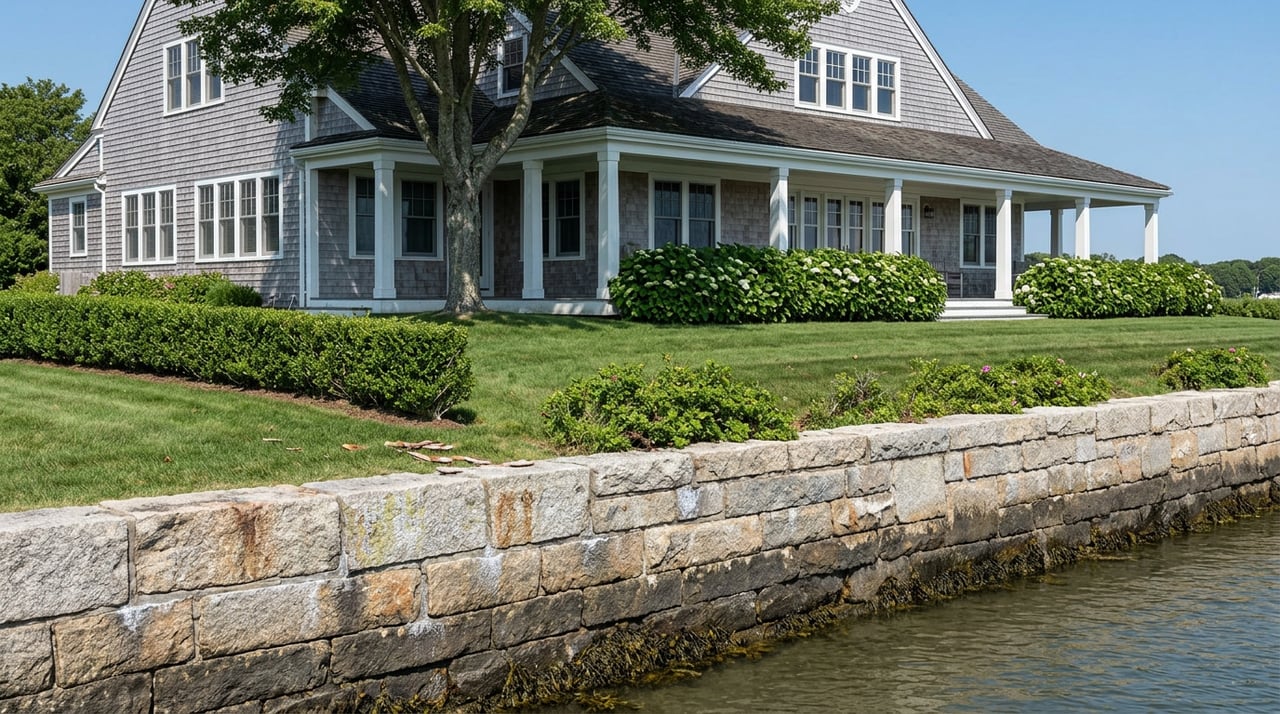
Chapter 91 doesn't just apply to marinas and commercial piers. It covers seawalls, revetments, bulkheads, and docks on residential property too, and Nahant's entire coastline sits within its jurisdiction. Any structure built to hold back the ocean or extend a home's reach into it, regardless of size or whether it went up decades ago or last year, generally needs a Chapter 91 license. There is a simplified path for small residential structures under 600 square feet, but simplified still means licensed, not exempt.
For a rocky, exposed peninsula like Nahant, this isn't a theoretical footnote. It's the difference between owning a wall and owning a wall with a state-issued permission slip attached to it.
What Nahant's Own History Shows
The 2018 storm is the clearest evidence of how seriously the town takes its shoreline infrastructure now. Short Beach was identified as the community's top climate vulnerability through Nahant's Municipal Vulnerability Preparedness planning, and it took years of coordination with state agencies and the local congressional delegation before the dune restoration grant came through in 2025. That is the town-owned side of the ledger: studied, funded, and moving through public process with real dollars behind it.
Private seawalls along that same coastline don't get that treatment automatically. A homeowner's wall might be structurally sound and still be operating without a current license, or with a license that was never properly transferred when the property last changed hands. Neither the tide nor the town cares which one it is until someone tries to repair it, insure it, or sell the house behind it.
The License That Doesn't Follow the Sale on Its Own
This is the part that catches buyers off guard. A Chapter 91 license is typically term-limited, often issued for a period measured in decades, and it is tied to the property, not automatically renewed or reissued just because ownership changes hands. When a waterfront home sells, the license is supposed to transfer with it, but that transfer only holds up if it gets recorded at the Registry of Deeds. Skip that step, or inherit a property where a prior owner skipped it, and the license can be treated as void, which means the wall itself may be considered an unlicensed structure under state law.
An unlicensed seawall doesn't just sit there quietly. It can complicate future repair permits, muddy the title search an attorney runs before closing, and hand a new owner a compliance problem they didn't create and didn't know to ask about. Even something as ordinary-seeming as a private dock carries the same risk, and Massachusetts law adds one more wrinkle for waterfront owners: a private beach in this state typically extends only to the low-water mark under an owner's control, and even that "privately owned" wet sand remains subject to a public easement for fishing, fowling, and navigation. Owning the shoreline in front of your house is not the same as owning the right to fence off access to it.
Nahant's own harbormaster regulations echo the same theme on the water side. Moorings are governed under Chapter 91 as well, and the town is explicit that a mooring permit doesn't transfer with the sale of a boat. If a waterfront listing includes a private mooring, that's a separate piece of paperwork from the house itself, not a package deal.
What This Means Before You Write an Offer or Sign a Listing Agreement
None of this should scare a serious buyer away from Nahant's waterfront. It should change what gets asked, and when.
- If a listing includes a seawall, dock, revetment, or bulkhead, ask for a copy of the Chapter 91 license before the offer stage, not during attorney review.
- Confirm the license's term dates. Some run 30 to 50 years, and a wall built decades ago may be closer to its renewal window than anyone realizes.
- Verify the license was actually recorded at the Registry of Deeds after the last transfer, not just referenced in an old file.
- If the property includes a mooring, treat that permit as its own line item, separate from the real estate closing entirely.
- Don't assume a seawall's condition tells you anything about its legal status. A wall can look freshly repaired and still be operating without a valid license, or look weathered and be perfectly compliant.
For a seller, the smarter move is to pull this documentation before listing rather than after an accepted offer. A missing or lapsed license found during a buyer's attorney review is a negotiation, sometimes a costly one. The same document found and resolved in advance is simply part of a clean, well-prepared file, which matters even more on a peninsula where waterfront inventory turns over slowly and buyers expect the seller to have done the homework.
A Short FAQ
Does every waterfront home in Nahant have a licensed seawall? Not necessarily. Chapter 91 requires a license for structures like seawalls and docks, but whether a given property's license exists, is current, and was properly recorded after past sales varies by parcel. It has to be checked individually, not assumed.
What happens if a license lapsed or was never recorded? The structure can be treated as unlicensed under state law, which may complicate repairs, insurance, and the title work involved in a future sale. It doesn't mean the wall is illegal to own, but it does mean the paperwork needs to be sorted out, ideally before it becomes a closing contingency.
Can a homeowner just repair a private seawall without dealing with any of this? Routine maintenance is different from structural alteration. Anything that changes the size, height, or footprint of an existing wall typically triggers a new or amended Chapter 91 review, so it's worth checking before hiring a contractor for anything beyond patchwork repairs.
Does flood insurance cover seawall damage? That's a question for a licensed insurance agent, since coverage depends heavily on the specific policy and whether the damage is classified as flood-related or storm-related. It's a separate conversation from the Chapter 91 licensing question, but both matter to a waterfront owner's total cost of ownership.
Nahant's coastline rewards the people who understand it, and that includes understanding what's actually recorded behind a seawall as much as what the tide looks like from the porch. If you're weighing a purchase or preparing to list a waterfront property here, Annie Wachtel can help you get the paperwork question answered early. Request a confidential market consultation to start with a clear picture of what you're actually buying or selling.