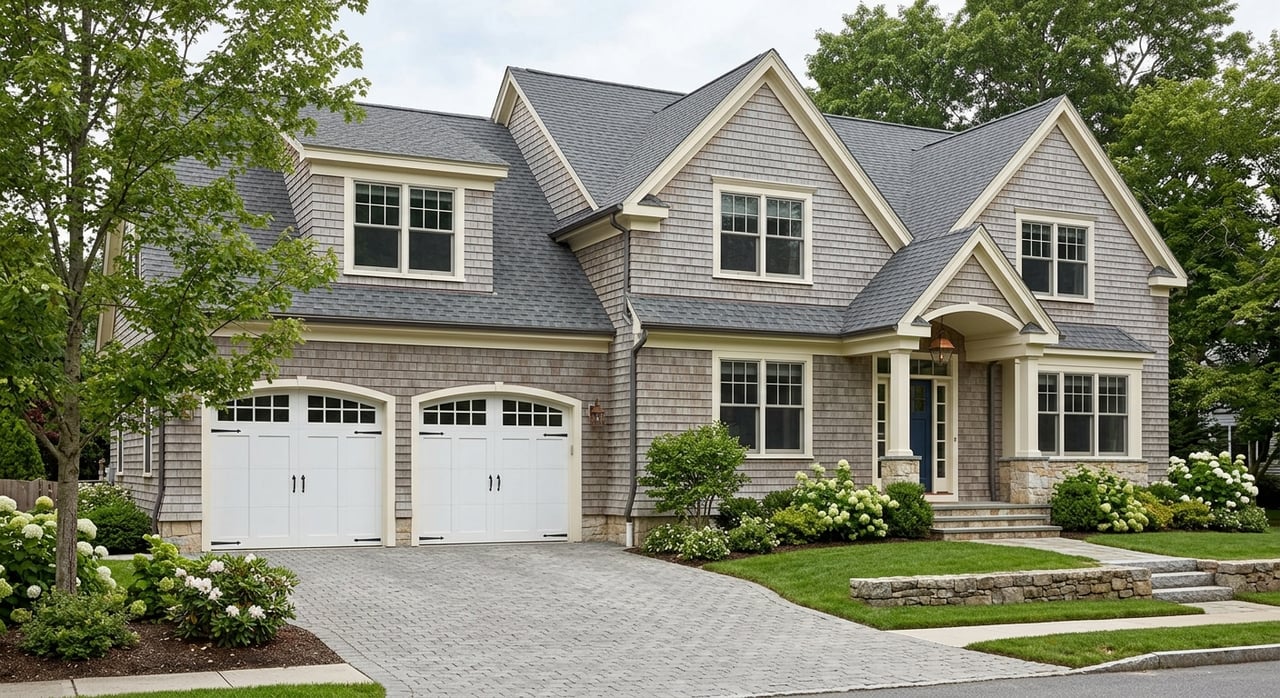
If you want more space and a North Shore address but still need to reach Boston for work, Lynnfield will likely catch your eye. It offers a distinctly suburban setting with mostly detached homes, strong road access, and a market that tends to appeal to buyers who value privacy and predictability over transit convenience. This guide will help you understand what you are really buying into in Lynnfield, from pricing and taxes to commute tradeoffs and day-to-day fit. Let’s dive in.
Why Lynnfield Appeals to Commuters
Lynnfield is best described as a premium, car-first suburb on the North Shore. Town planning documents characterize it as a traditional New England residential community with limited business and industry, and local housing data show a market dominated by owner-occupied single-family homes. If your goal is to trade a denser urban setting for a quieter residential environment, Lynnfield fits that profile well.
Residents have also said they value Lynnfield’s semi-rural feel, country charm, and tree-lined streets, according to town planning materials. That low-density character is a big part of the appeal, but it also shapes what buyers should expect in terms of inventory, pricing, and transportation.
Lynnfield Housing Market Basics
Lynnfield is not a low-cost alternative to Boston. It is a higher-price suburban market where detached homes make up the vast majority of the housing stock. According to the town’s 2023 community snapshot, 92% of housing is single-family, while only 7% falls into missing-middle housing types.
That same snapshot shows 85% owner occupancy and 15% renter occupancy. In practical terms, that means you should expect a market with limited housing diversity and fewer entry points than towns with more condos, multi-family homes, or denser village-style development.
Recent pricing reinforces that position. Zillow currently places Lynnfield around $1.04M to $1.06M, with the town market page listing a typical home value of $1,059,995, up 2.3% year over year, and only 17 homes for sale with 4 new listings as of February 28, 2026, according to Zillow’s Lynnfield market data. For buyers, that points to a relatively tight inventory environment.
How Lynnfield Compares Nearby
If you are cross-shopping North Shore and north-of-Boston suburbs, Lynnfield sits in premium territory, though not at the very top of the regional price range. On Zillow’s nearby comparison, Lynnfield is priced above Wakefield, Reading, Peabody, North Reading, and Melrose, while still below Winchester, based on Zillow’s local comparison data.
That matters because Lynnfield’s value proposition is not simply “closer to Boston for less.” Instead, it is more about the combination of detached housing, lower-density streetscapes, and highway-oriented access. If you are choosing Lynnfield, you are typically prioritizing housing type and setting as much as commute distance.
What Boston Commuters Need to Know
The biggest lifestyle question in Lynnfield is not whether you can get into Boston. It is how you want to do it. Lynnfield is firmly road-oriented, and your daily routine will usually reflect that.
Town documents state that Route 1 and Route 128/I-95 pass through Lynnfield, with I-93 a short distance west via Route 128, while the town itself is not serviced by the MBTA, according to local planning documents. Another town planning presentation notes that non-single-occupant-vehicle transportation options are limited and that commuter rail access is available only in adjacent communities, according to the Lynnfield 2040 snapshot.
For many Boston-area buyers, that means Lynnfield works best if you are comfortable with one of two patterns:
- Driving most or all of the way to work
- Driving to a commuter rail station in a neighboring community and continuing by train
A 2024 MBTA Communities memo notes that Lynnfield falls under the law because it is adjacent to commuter rail communities including Lynn, Wakefield, and Reading. While Lynnfield itself does not have rail service, that regional relationship helps explain why many commuters think of it as a drive-to-station town rather than a walk-to-train town.
Commute Reality and Daily Rhythm
Commute convenience in Lynnfield is tied more to highways than to transit frequency. If you need immediate rail access or want to avoid driving most days, Lynnfield may feel less convenient than some neighboring communities. If, however, you value direct roadway connections and are already accustomed to a car-based schedule, Lynnfield may feel more intuitive.
Census Reporter estimates Lynnfield’s mean travel time to work at 32.1 minutes. That figure does not guarantee your specific commute, of course, but it supports the broader picture of Lynnfield as an established commuter suburb rather than a transit-centered one.
The local employment pattern tells a similar story. Town planning data show that 4,794 residents work outside Lynnfield, while only about 5% of people who work in town also live there, according to the community snapshot. In other words, Lynnfield functions largely as a place people come home to, not just a place they work.
Budget Beyond the Purchase Price
In Lynnfield, affordability is about more than the offer price. Carrying costs deserve close attention, especially for buyers balancing mortgage payment, commuting expenses, and home maintenance.
The town’s FY 2026 residential property tax rate is $11.46 per $1,000 of assessed value, according to the Lynnfield Assessing Department. At that rate, a home valued at $1,059,995 would carry about $12,148 per year in property taxes, while a $1,387,500 home would carry about $15,901 per year.
Here is a quick budgeting snapshot:
| Home Value | Estimated Annual Property Tax | Estimated Monthly Tax Cost |
|---|---|---|
| $1,059,995 | $12,148 | $1,012 |
| $1,387,500 | $15,901 | $1,325 |
Those numbers do not include insurance, utilities, maintenance, or any financing costs. If you are moving from a smaller condo or a lower-cost suburb, Lynnfield’s monthly ownership picture may feel noticeably different even before you account for commuting costs.
Septic Is Part of Due Diligence
One detail many buyers overlook at first is that Lynnfield does not have public sewer. Most residents and businesses use septic systems, according to town planning materials.
That does not make a property less desirable, but it does mean your due diligence should be more thorough. Septic inspection, possible replacement costs, and long-term maintenance should all be part of your planning. For Boston commuters buying in a fast-moving market, this is one of those practical details that is easy to underestimate until you are under contract.
Household Profile and Community Context
Lynnfield’s demographics help explain why the town appeals to many move-up buyers and established households. The town snapshot shows that 40% of households have children, 18% of residents are 65 or older, and 85% of households are owner-occupied, based on the community presentation.
That mix suggests a multi-generational suburban community with a strong owner-occupant base. It can be a good fit if you are looking for a town where many households are settled for the long term rather than turning over frequently.
Census Reporter also estimates a median household income of $175,265, which is consistent with Lynnfield’s profile as an affluent commuter market. For buyers, that often translates into strong competition for well-located homes in good condition.
School Information for Buyers
If school information is part of your search, it is helpful to understand the district in factual terms. Lynnfield Public Schools enrolls 2,159 students in 2025-26 and includes Huckleberry Hill, Summer Street, Lynnfield Middle School, Lynnfield High School, and Lynnfield Preschool. The same state profile shows that all 142 kindergarten students are in full-day kindergarten.
In the 2025 official accountability report, the district was classified as not requiring assistance or intervention and was making substantial progress toward targets. If you are comparing communities, this gives you a verified starting point for understanding the district.
Who Lynnfield Fits Best
Lynnfield tends to make the most sense for a buyer who wants a detached home, prefers a quieter suburban setting, and does not need direct in-town rail access. It can be especially appealing if your household is already car-dependent or comfortable with a drive-to-station routine.
It may be less ideal if you want a lower entry price, broader condo inventory, or a daily commute centered on walking to the MBTA. In that sense, Lynnfield is a town where the tradeoffs are fairly clear: you are often paying more for space, privacy, and a low-density setting, while accepting a more driving-dependent routine.
Smart Questions to Ask Before You Buy
As you evaluate Lynnfield, keep these questions in mind:
- Do you want a detached-home market, or would more housing variety help your budget?
- Are you comfortable with a car-first commute pattern?
- Have you budgeted for Lynnfield property taxes at current rates?
- If the home has septic, have you accounted for inspection and maintenance risk?
- Does Lynnfield’s limited inventory fit your timeline, or do you need more options quickly?
The clearer you are on those answers, the easier it becomes to decide whether Lynnfield matches your lifestyle and financial goals.
If you are weighing Lynnfield against other North Shore options, a local, data-driven comparison can save you time and help you avoid expensive guesswork. Annie Wachtel offers thoughtful, personalized guidance for buyers who want a clear view of pricing, commute tradeoffs, and long-term fit across the North Shore.
FAQs
Is Lynnfield a good town for Boston commuters?
- Lynnfield can be a strong fit for Boston commuters who are comfortable with a car-first lifestyle and want detached housing, but it is not an MBTA-served town.
What is the typical home price in Lynnfield MA?
- Recent Zillow data in the research report places Lynnfield around $1.04 million to $1.06 million, making it a premium market compared with many nearby towns.
Does Lynnfield MA have commuter rail service?
- No. Town documents state that Lynnfield is not serviced by the MBTA, so many commuters drive or use rail stations in neighboring communities.
Are most homes in Lynnfield single-family houses?
- Yes. Town planning data show that 92% of Lynnfield housing is single-family, which is a major part of the town’s market identity.
What property taxes should Lynnfield buyers expect?
- Lynnfield’s FY 2026 residential property tax rate is $11.46 per $1,000 of assessed value, so taxes are an important part of your monthly ownership cost.
Do Lynnfield homes use sewer or septic?
- Most Lynnfield properties use septic systems because the town does not have public sewer, so septic due diligence is important when buying.