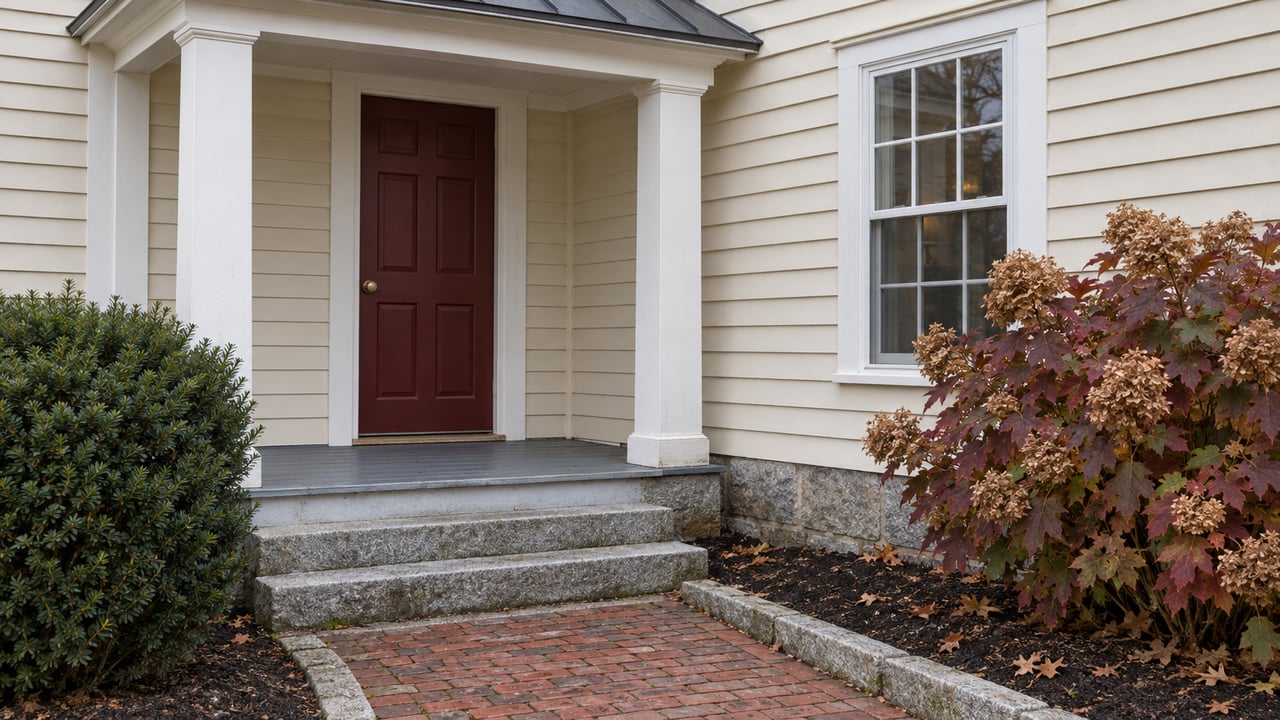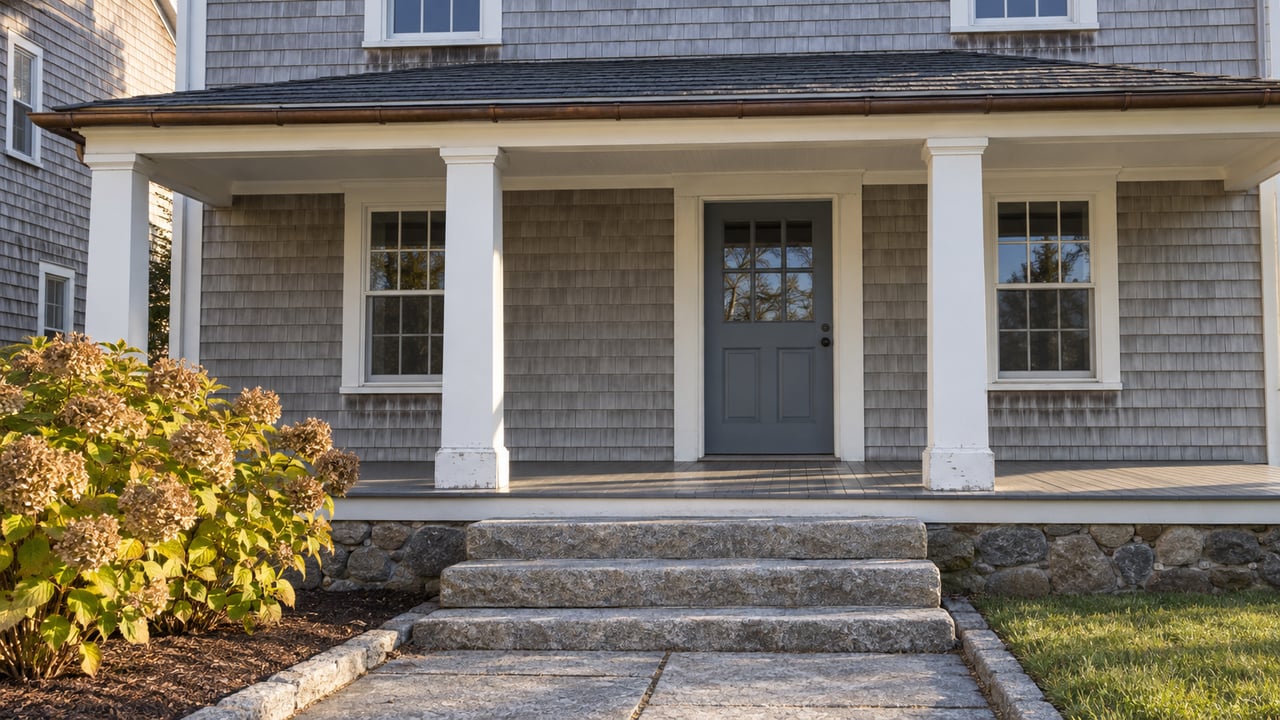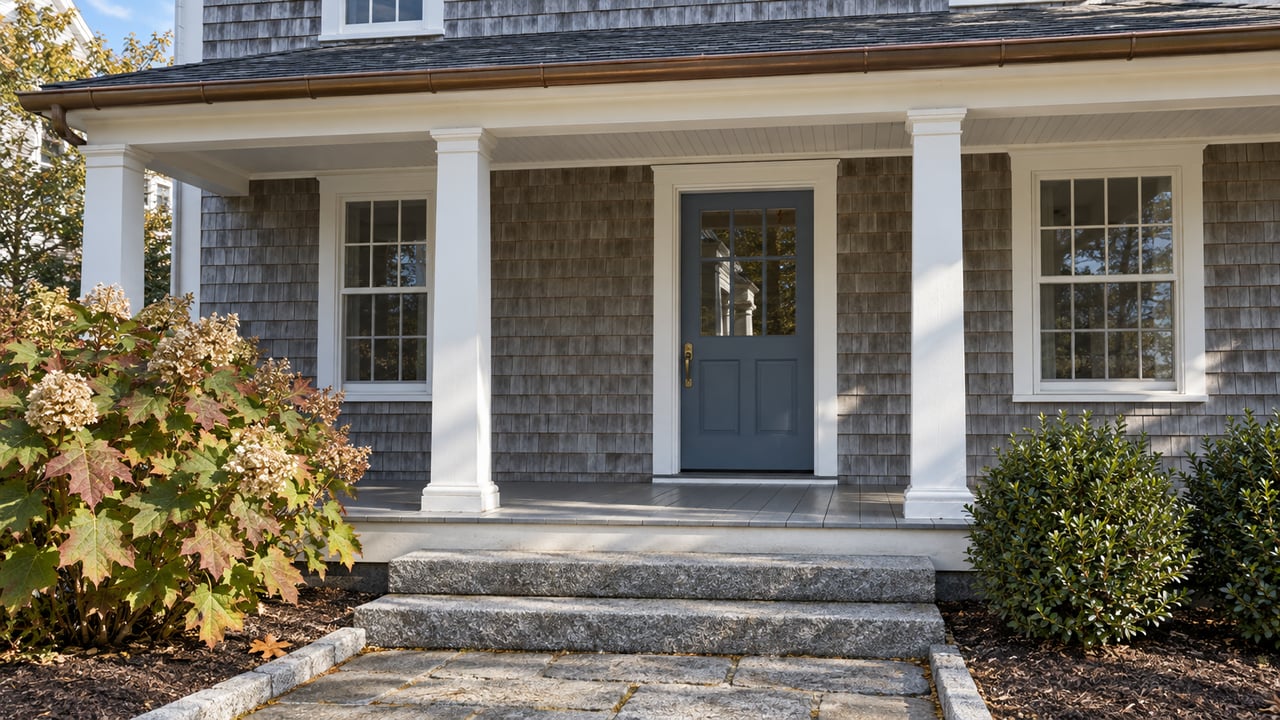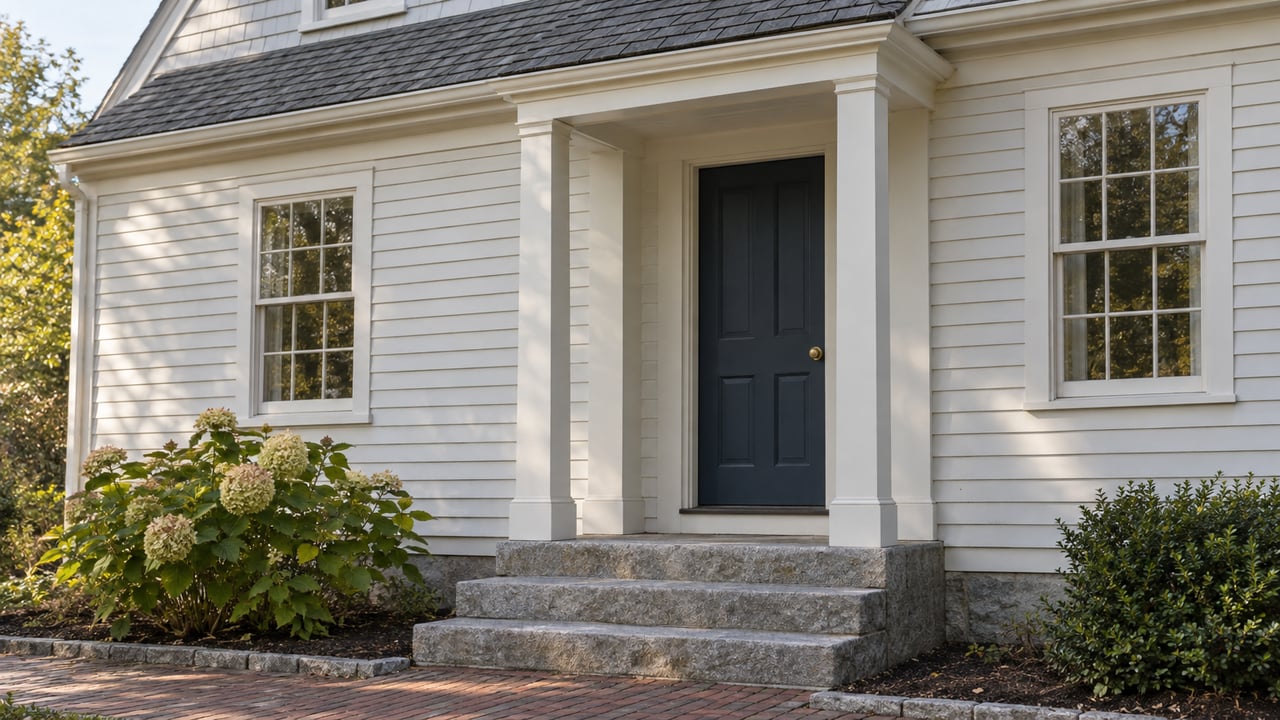
A buyer touring a shingled Federal on Franklin Street in Old Town falls for the wide-board pine floors and the small-paned windows that catch the harbor light every afternoon. The listing calls the block "historic." So does the house two streets over on Green Street, same vintage, same charm, same word in the description. What the listing sheet does not say is that if the Franklin Street buyer wants to swap those windows after closing, they need a hearing and a certificate before the town will even issue a building permit. The Green Street buyer does not.
Both houses sit inside what most people mean when they say "historic Marblehead." Only one of them sits inside a district with the power to say no.
Two Different Things Called Historic
Marblehead has a National Register historic district that runs to 2,300 acres and includes 988 contributing buildings, among them roughly 200 houses built before the Revolutionary War and a handful from the 1600s. Fort Sewall, with origins dating to 1644, sits inside it. So do three National Historic Landmarks: the General John Glover House, the Jeremiah Lee Mansion, and the Simon Bradstreet House. The district was added to the National Register in 1984, and it covers most of what a visitor would point to and call old Marblehead.
That designation is real and it means something for grant eligibility and for the town's own preservation planning. The National Park Service explains that National Register listing alone does not automatically give a design review board authority to tell an owner what siding to install or what pitch a new dormer should have.
That authority belongs to a much smaller footprint: the Old Town and Gingerbread Hill local historic districts, created by town bylaw in 1968 and administered by the Old and Historic Districts Commission. The OHDC is a five-member board, with two alternates, appointed annually by the Select Board. It meets the first and third Tuesday of the month at 7 p.m. in Abbot Hall, 188 Washington Street. Anyone proposing an exterior change inside Old Town or Gingerbread Hill needs a Certificate of Appropriateness from that board before the town will issue a building permit for the work.
A house can be squarely inside the 2,300-acre National Register district and still sit outside the roughly 1968-drawn local district lines that actually govern what you can do to it. The word "historic" covers both situations equally well in a listing description. The permitting rules do not.
What Actually Needs a Certificate
Inside Old Town or Gingerbread Hill, the town's own bylaw spells out what a Certificate of Appropriateness application has to describe: the texture and material of the exterior, whether that's shingles or clapboards, trim, gutters, window sash, door frames, number of stories, and roof pitch. Signs get their own review too. Interior arrangements are explicitly exempted. The commission has no say over your kitchen, only over what the street sees.
The town has gone further than the general bylaw language suggests. Separate from the main application form, Marblehead publishes standalone Fencing Guidelines, Hardscape Guidelines, and Hardscape Walls Guidelines for these two districts. A garden wall or a picket fence is not a footnote to the review process. It has its own guideline document.
So the practical list of what triggers a hearing inside the local districts includes:
- New siding or shingle replacement
- Window and sash replacement
- Roof pitch or dormer changes
- Fences and gates
- Garden and hardscape walls
- Exterior signage
None of this applies on the other side of the local district line, even on a street the National Register considers just as historic.
The Calendar the Listing Sheet Skips
The sequence matters as much as the requirement. An application first goes to the Building Department for a code check, then to the Engineering Department to schedule a hearing before the OHDC. Because the commission only meets twice a month, a project that misses the cutoff for the first Tuesday waits for the third, or for next month entirely. Once the commission approves an application, the certificate is typically ready for pickup within about 15 days. Only then can the Building Department issue the actual permit.
For a buyer planning to close on an Old Town house and start a window project the following week, that plan needs a hearing cycle built into it before the permit clock even starts. For a seller who replaced a fence or repointed a chimney a few years back, the practical question at listing time is whether that work ever went through the commission at all, because a permit that was issued without a required certificate is the kind of detail a title search or a buyer's attorney can surface later in the process.
| Designation | What it recognizes | Who enforces exterior changes |
|---|---|---|
| National Register Marblehead Historic District (2,300 acres, listed 1984) | Historical and architectural significance | No design review authority |
| Old Town / Gingerbread Hill local districts (established 1968) | Same, at a neighborhood scale | Old and Historic Districts Commission, via Certificate of Appropriateness |
The Streets Just Outside the Line
Marblehead's own 2025 community-wide historic preservation survey master plan flagged this gap directly. It named specific neighborhoods on the periphery of the local historic districts, dense with 19th-century architecture and largely outside OHDC jurisdiction, as the places most vulnerable to unsympathetic change: The Shipyard, Reed's Hill, Green Street-Curtis Heights, Clifton Heights, and Devereux. These are not obscure corners of town. They're neighborhoods where older summer dwellings survive in numbers, sitting inside the broad National Register boundary but outside the smaller footprint where a commission actually reviews what happens to them.
The same survey noted something else worth carrying into a purchase decision: even within the districts that do have review authority, some owners have made changes or built new construction without ever obtaining a Certificate of Appropriateness. The rule existing on paper and the rule being followed on the ground are not always the same thing, which is exactly why a buyer's attorney checking permit history against OHDC records is doing more than a formality.
Put together, this means "historic" on a Marblehead listing tells you almost nothing about what you can or cannot do to the house, or what the house next door might become. The only way to know is to check which side of the 1968 district lines a specific address falls on, something the town's own Historic Districts Map settles far more precisely than any listing description does.
If you're weighing a Franklin Street address against one on Green Street, the design-review authority attached to each is as material to your renovation plans and your resale story as the square footage. Annie Wachtel works these distinctions into pricing and offer strategy for exactly this kind of comparison across Marblehead's older neighborhoods, and can walk through what a specific address's district status means before you write an offer.
This article is general information, not legal, tax or financial advice. Consult a qualified professional about your situation.