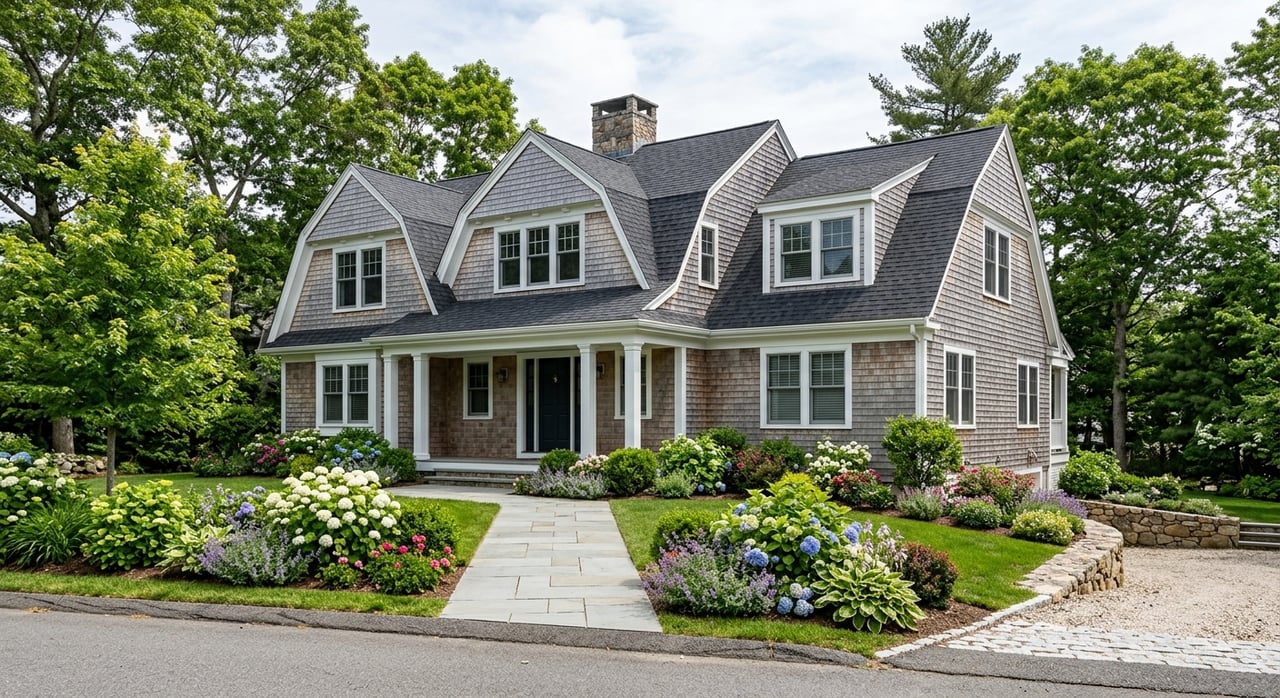
If you are torn between Nahant and Marblehead, you are not alone. Both offer a coastal Massachusetts lifestyle, but they feel very different once you look past the ocean views. If you want to choose with more confidence, it helps to compare home prices, housing patterns, waterfront access, and daily logistics side by side. Let’s dive in.
Start With the Big Picture
Nahant and Marblehead are both coastal communities with home values above the Massachusetts baseline. Zillow’s current home value index puts Nahant at $991,846 and Marblehead at $1,076,150, compared with $672,867 statewide. Those figures are best used as a directional snapshot, since valuation models and sale data do not measure the market in exactly the same way.
The bigger difference is often market rhythm. Redfin data for the three months ending May 2026 shows just 2 homes sold in Nahant, compared with 42 in Marblehead in May 2026. That means Marblehead usually gives you a deeper pool of sales activity to study, while Nahant can feel more limited and less predictable from one listing to the next.
Compare Pricing and Carrying Costs
If you are deciding between these towns, pricing is about more than the headline number. You also want to understand how quickly homes move and what ownership may look like over time.
In recent-sale data, Nahant posted a median sale price of $1,266,742, with a median 189 days on market. Marblehead posted a median sale price of $899,462, with a median 21 days on market. Because Nahant had only 2 sales in that sample, those figures should be read carefully, but they still highlight how thin the Nahant market can be.
Town assessment data also points to a meaningful difference in average carrying cost. Nahant’s FY2026 average single-family assessment was $1,073,865, with an average tax bill of $9,654. Marblehead’s 2025 town report shows an average single-family assessment of $1,291,507 and an average single-family tax bill of $11,055.
What that means for you
If you prefer a market with more sales volume and clearer pricing signals, Marblehead may feel easier to read. If you are comfortable in a smaller market where each property can be more unique, Nahant may still be a strong fit. In either town, careful pricing analysis matters because broad averages do not tell the full story of a specific home.
Look at Housing Stock and Lot Patterns
The feel of each town is shaped by its housing base. That has a direct impact on what you are likely to find, how often new options come to market, and how much variety exists from one area to another.
Nahant is mostly single-family, but it also has a meaningful multifamily component. According to the town housing plan, 73% of units are single-family and 26% are multifamily, with most multifamily buildings on the smaller side. Planning documents also describe Nahant as a mature suburban town with largely owner-occupied single-family homes on quarter- to half-acre lots, and more than half of the housing stock was built before 1939.
Nahant’s land constraints are a major part of the story. The town notes that vacant land is scarce and that new housing usually comes through infill, redevelopment, or teardowns. Even its current MBTA 3A response centers on a relatively small 8.3-acre overlay district at Bass Point expected to allow up to 84 multifamily units.
Marblehead is also heavily single-family. Its housing plan says 77% of units are single-family, and less than 3% of the housing stock has been built since 2000. At the same time, lot sizes and zoning patterns are more varied, with minimum lot sizes in much of town at 10,000 square feet or less, and some districts down to 7,500 or 6,000 square feet.
How the housing mix feels different
Nahant often feels tighter and more land-limited. Inventory can be narrow, and the setting can feel especially contained because the town is so compact. Marblehead is still a mature coastal market, but it tends to offer more variation in lot types, street patterns, and home options.
Coastal Access Feels Different in Each Town
Both towns offer strong coastal appeal, but they deliver it in different ways. The right fit depends on whether you want a compact peninsula experience or a broader waterfront network.
Nahant is the smaller and more concentrated setting. Its hazard mitigation plan describes it as a 1.04-square-mile peninsula surrounded on three sides by the Atlantic Ocean and connected to Lynn by a single road, the Causeway. The town says all five town beaches are free and open to the public, though parking is often restricted or resident-only.
Short Beach is especially central to daily life in Nahant because it sits beside downtown across from restaurants and stores. That creates a close connection between beach access and the town’s small commercial core. For many buyers, that compact coastal pattern is a major part of the appeal.
Marblehead has a larger waterfront system and a different sense of scale. The town’s open-space plan cites 14.2 miles of tidal shoreline and public access points throughout town, including Castle Rock, Chandler Hovey Park, Fort Sewall, Seaside Park, Crocker Park, and Crowninshield Island. The town also highlights Devereux Beach as its premier beach, with parking and facilities.
By land area, Marblehead is about 4.38 square miles, compared with Nahant’s 1.04 square miles. That size difference shapes how each place feels day to day. Marblehead also has a more defined civic and historic center around Washington Street and Abbot Hall, with preservation efforts focused mainly on the historic downtown area.
Think About Commute and Daily Logistics
Lifestyle is not only about the shoreline. It is also about how easily you can move through your week, especially if you commute or want backup transportation options.
Marblehead has the stronger transit menu. Its housing plan says the 441 and 442 buses run frequently, including every 15 minutes during rush hour and every half hour during the day, with access to Haymarket or Wonderland for Boston trips. The same plan notes that Salem and Swampscott commuter rail stations are about a 15-minute drive away, and that Route 1A, U.S. Route 1, and Route 128 add more car access options.
Nahant is more limited on transit. Town housing-plan materials say the MBTA route serving Nahant is the 439, a rush-hour weekday route with limited trips that connects to Lynn or Wonderland. The town also confirms that Nahant receives MBTA bus service, but many residents rely on private vehicles.
That does not mean Marblehead is easy to navigate without a car in every location. The town notes that coastal and Neck areas are not always within comfortable walking distance of bus stops. Still, Marblehead offers more transit redundancy, which can matter if your schedule changes or you want more flexibility.
Factor in Coastal Risk Awareness
In either town, coastal living comes with practical planning needs. That does not make one town automatically better than the other, but it should shape your due diligence.
Nahant’s hazard mitigation plan identifies the Causeway and barrier-beach system as core vulnerabilities. Because Nahant is a peninsula connected by a single road, location and access are important parts of the conversation.
Marblehead’s housing plan notes that sea-level rise is expected to expand flood zones over time, especially in shoreline areas and on the Neck. If you are comparing homes near the water in either community, it is wise to evaluate flood exposure, site conditions, and long-term ownership considerations as part of the buying process.
Which Town May Fit Your Goals
There is no universal winner here. The better choice depends on how you want to live and what tradeoffs you are comfortable making.
Nahant may fit you if you want
- A very small peninsula setting
- Direct beach access woven into daily life
- Older detached homes in a quieter residential pattern
- A more intimate and land-constrained coastal market
- A setting where car dependence is less of a concern for you
Marblehead may fit you if you want
- A stronger historic town-center feel
- More public waterfront access points across town
- More transit options and backup commute routes
- A broader base of sales activity to help read pricing trends
- More neighborhood and lot-size variation within a coastal town
The Bottom Line on Nahant vs. Marblehead
Nahant and Marblehead both offer a classic North Shore coastal lifestyle, but they serve different priorities. Nahant is the smaller, tighter, and more isolated shoreline market, while Marblehead is the more varied, more transit-connected, and more active one from a sales perspective.
If you are weighing the two, the best next step is to compare not just towns, but specific property types, locations, and daily routines. A compact peninsula home near the beach and a larger in-town Marblehead property can offer very different ownership experiences, even at similar price points.
If you want help sorting through the tradeoffs between Nahant and Marblehead, Annie Wachtel offers thoughtful, data-informed guidance tailored to the North Shore market.
FAQs
What is the main lifestyle difference between Nahant and Marblehead?
- Nahant offers a more compact peninsula setting with a quieter residential pattern, while Marblehead offers a larger town footprint, a more defined historic center, and more varied waterfront access points.
How do Nahant and Marblehead home prices compare?
- Zillow’s current home value index shows Nahant at $991,846 and Marblehead at $1,076,150, though recent-sale data can look different and should be read carefully based on sample size and timing.
Is the Nahant housing market smaller than the Marblehead housing market?
- Yes. Redfin data for the three months ending May 2026 shows only 2 homes sold in Nahant, while Marblehead had 42 homes sold in May 2026, making Marblehead the deeper and easier-to-read sales market.
Which town has more transit options for Boston-area commuting?
- Marblehead has more transit options, with frequent 441 and 442 bus service and nearby commuter rail access in Salem and Swampscott, while Nahant is served by the more limited 439 rush-hour weekday route.
Are Nahant and Marblehead both affected by coastal risk?
- Yes. Nahant’s planning documents identify the Causeway and barrier-beach system as vulnerabilities, and Marblehead notes that sea-level rise is expected to expand flood zones over time, especially in shoreline areas and on the Neck.
Which town offers more housing variety, Nahant or Marblehead?
- Marblehead generally offers more variation in lot sizes and neighborhood patterns, while Nahant is more land-constrained with a tighter housing base and fewer development opportunities.